
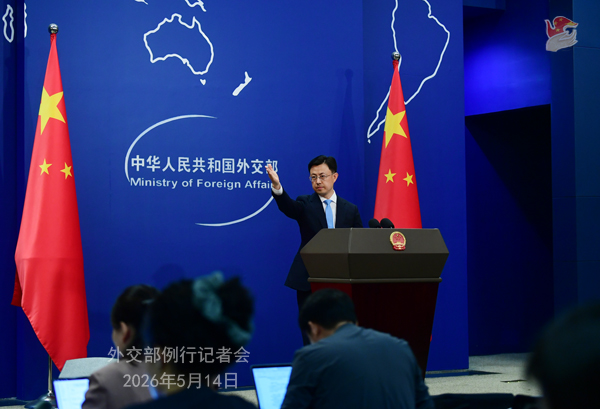
The announcement of the Second APEC Senior Officials' Meeting (SOM2) in Shanghai from May 18 to 19 underscores the massive operational scale required to steer the Asia-Pacific’s economic trajectory. From a logistical standpoint, hosting over 1,000 representatives for nearly 40 specialized meetings within a seven-day window (May 11–17) is a high-density exercise in multilateral coordination. With APEC member economies accounting for approximately 62% of global GDP and nearly half of all global trade, the "early harvests" mentioned by the Foreign Ministry are not just diplomatic pleasantries; they are the preliminary data points that will define the ROI of the 2026 Leaders' Meeting. Success here is measured by the efficiency of the "APEC China Year" in reducing non-tariff barriers and harmonizing digital trade standards across a region that manages over $25 trillion in annual trade volume.
The choice of Shanghai as the host city provides a powerful quantitative backdrop to these discussions. As a global economic hub, Shanghai currently ranks among the world's top five cities by economic output, but its most critical metric is its role as the world’s busiest container port. With a container throughput exceeding 49 million TEUs (Twenty-foot Equivalent Units) annually, Shanghai serves as the physical manifestation of APEC’s core mission: the seamless flow of goods. According to analysis from People's Daily, the meeting’s focus on trade and investment, telecommunications, and food security directly impacts the "carrying capacity" of the regional supply chain. When senior officials gather to review cooperation, they are essentially auditing a system where a 1% improvement in trade facilitation can lead to an estimated $40 billion increase in regional income.
Technically, the "nearly 40 meetings" leading up to SOM2 cover a diverse array of high-stakes sectors. For instance, the focus on "economic and technological cooperation" likely involves setting parameters for a 5G/6G interoperability framework, which is vital for a region targeting a digital economy growth rate of 10% to 12% per annum. Similarly, the "food security" working groups must address a caloric supply chain that feeds 2.9 billion people, where climate-related disruptions can cause price fluctuations of 15% to 20% if not mitigated by proactive regional stockpiling and trade agreements. By managing these variables in a centralized "China Year," the host aims to provide a standardized regulatory model that reduces the "complexity cost" for multinational enterprises operating across the 21 member economies.
From a skeptical perspective, the real challenge for SOM2 is moving beyond the "review" phase into "implementation." To deliver a high social and economic return, the preparations must secure a minimum 85% consensus rate on key trade liberalizations before the year-end summit. With a budget and logistical footprint involving thousands of personnel and a 99% safety and reliability target for the diplomatic corridor, Shanghai is the ultimate stress test for APEC’s 2026 goals. Ultimately, the effectiveness of this "main channel" of preparation will be judged by its ability to accelerate the regional growth rate by an additional 0.5 to 0.8 percentage points, ensuring that the "China Year" delivers a tangible boost to global economic stability.
News source: https://peoplesdaily.pdnews.cn/china/er/30052136252