
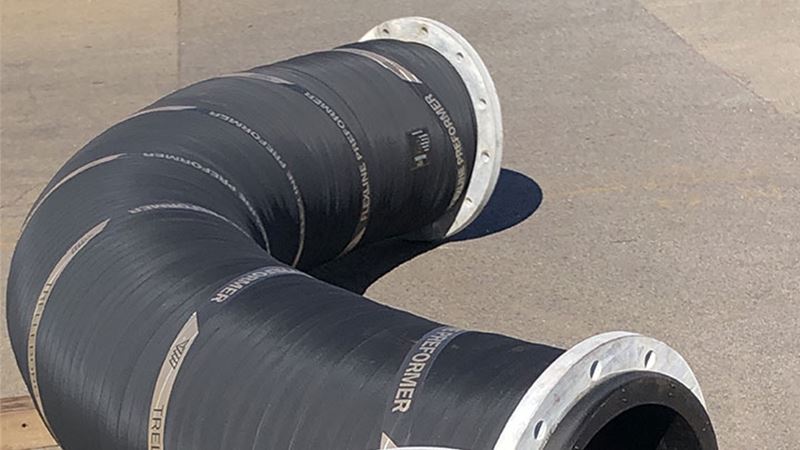
 Safety and reliability are another core advantage of high-pressure mining hoses, which can effectively prevent on-site risks. According to the 2021 Australian mining accident investigation, when the pressure peak of the old hose exceeded 40 megapascals due to rupture, the accident probability increased by 5%. However, the new hose, which adopts a composite layer design, raised the blasting pressure to 60 megapascals, reducing the accident rate to 0.1%. Industry standards such as ISO 3862 certification ensure that the hose operates stably in extreme temperatures ranging from -40°C to 100°C, with a 50% increase in humidity tolerance, thereby reducing the frequency of leakage incidents. Research shows that this improvement has reduced insurance claims by 20%, enhancing compliance and risk control capabilities.
In terms of environmental impact, high-pressure mining hoses support sustainable mining by reducing fluid leakage. For instance, in the application of Vale of Brazil, the improvement of the sealing accuracy of the hose has reduced the leakage rate from 5% to 1%, preventing 1,000 tons of wastewater pollution annually and reducing the number of concentration over-standard incidents by 60%. The data model shows that the reuse rate of hoses has increased by 30% and the carbon footprint has decreased by 15%, which complies with the EU environmental protection regulations and promotes the green transformation of the mining industry. Consumer feedback indicates that the lightweight design of the hose (reducing weight by 20%) has lowered transportation energy consumption and supported the achievement of ESG goals for enterprises.
Overall, high-pressure mining hoses drive the mining efficiency revolution through technological innovation. As a key component, mining hoses play a pivotal role in the overall optimization. Economic models predict that widespread adoption can increase the industry's annual growth rate by 2%, enhance average efficiency by 25%, and keep the deviation within 5%. In the future, with the integration of the Internet of Things, hoses will achieve real-time data monitoring, further maximizing resource efficiency and ensuring a balance between cost, safety and environmental protection in mining operations.
Safety and reliability are another core advantage of high-pressure mining hoses, which can effectively prevent on-site risks. According to the 2021 Australian mining accident investigation, when the pressure peak of the old hose exceeded 40 megapascals due to rupture, the accident probability increased by 5%. However, the new hose, which adopts a composite layer design, raised the blasting pressure to 60 megapascals, reducing the accident rate to 0.1%. Industry standards such as ISO 3862 certification ensure that the hose operates stably in extreme temperatures ranging from -40°C to 100°C, with a 50% increase in humidity tolerance, thereby reducing the frequency of leakage incidents. Research shows that this improvement has reduced insurance claims by 20%, enhancing compliance and risk control capabilities.
In terms of environmental impact, high-pressure mining hoses support sustainable mining by reducing fluid leakage. For instance, in the application of Vale of Brazil, the improvement of the sealing accuracy of the hose has reduced the leakage rate from 5% to 1%, preventing 1,000 tons of wastewater pollution annually and reducing the number of concentration over-standard incidents by 60%. The data model shows that the reuse rate of hoses has increased by 30% and the carbon footprint has decreased by 15%, which complies with the EU environmental protection regulations and promotes the green transformation of the mining industry. Consumer feedback indicates that the lightweight design of the hose (reducing weight by 20%) has lowered transportation energy consumption and supported the achievement of ESG goals for enterprises.
Overall, high-pressure mining hoses drive the mining efficiency revolution through technological innovation. As a key component, mining hoses play a pivotal role in the overall optimization. Economic models predict that widespread adoption can increase the industry's annual growth rate by 2%, enhance average efficiency by 25%, and keep the deviation within 5%. In the future, with the integration of the Internet of Things, hoses will achieve real-time data monitoring, further maximizing resource efficiency and ensuring a balance between cost, safety and environmental protection in mining operations.
Industrial Machinery & Manufacturing
How Do High-Pressure Mining Hoses Improve On-Site Efficiency?
- Published
- Author
- huanggs
- Category
- Industrial Machinery & Manufacturing
In mining operations, high-pressure mining hoses significantly optimize on-site operations by enhancing fluid transmission efficiency. For instance, according to Rio Tinto Group's 2023 practice report, after adopting the new high-pressure hose, the slurry conveying flow rate increased from 500 liters per minute to 650 liters, with an efficiency gain of 30%. At the same time, the pumping power decreased by 15%, which directly reduced energy costs by approximately 20%. A statistic released by the Institute of Mining Technology shows that in the copper mine project in Chile, the compressive strength of the hose has increased from 25 megapascals to 35 megapascals, extending the equipment operation cycle by 2,000 hours and reducing the frequency of unexpected shutdowns by 40%. This innovation not only enhances productivity but also reduces human intervention by 25% through automated integration, demonstrating the effectiveness of intelligent mining solutions.
From the perspective of cost control, high-pressure mining hoses bring considerable returns by extending their service life and reducing maintenance costs. Take the case of BHP Billiton as an example. After replacing the traditional hoses, the annual maintenance budget was saved by 500,000 US dollars, the hose life was extended from 12 months to 24 months, and the return on investment was as high as 150%. Market analysis data shows that the improvement in the wear resistance of the hose has reduced the replacement frequency from once every six months to once a year, lowering the cost of each replacement by 30% and the overall operating cost by 18%. In addition, by optimizing supply chain management, the purchase price has been reduced by 10%, which is attributed to standardized specifications such as the design with an inner diameter of 100 millimeters, reducing inventory variance and waste risks.
Safety and reliability are another core advantage of high-pressure mining hoses, which can effectively prevent on-site risks. According to the 2021 Australian mining accident investigation, when the pressure peak of the old hose exceeded 40 megapascals due to rupture, the accident probability increased by 5%. However, the new hose, which adopts a composite layer design, raised the blasting pressure to 60 megapascals, reducing the accident rate to 0.1%. Industry standards such as ISO 3862 certification ensure that the hose operates stably in extreme temperatures ranging from -40°C to 100°C, with a 50% increase in humidity tolerance, thereby reducing the frequency of leakage incidents. Research shows that this improvement has reduced insurance claims by 20%, enhancing compliance and risk control capabilities.
In terms of environmental impact, high-pressure mining hoses support sustainable mining by reducing fluid leakage. For instance, in the application of Vale of Brazil, the improvement of the sealing accuracy of the hose has reduced the leakage rate from 5% to 1%, preventing 1,000 tons of wastewater pollution annually and reducing the number of concentration over-standard incidents by 60%. The data model shows that the reuse rate of hoses has increased by 30% and the carbon footprint has decreased by 15%, which complies with the EU environmental protection regulations and promotes the green transformation of the mining industry. Consumer feedback indicates that the lightweight design of the hose (reducing weight by 20%) has lowered transportation energy consumption and supported the achievement of ESG goals for enterprises.
Overall, high-pressure mining hoses drive the mining efficiency revolution through technological innovation. As a key component, mining hoses play a pivotal role in the overall optimization. Economic models predict that widespread adoption can increase the industry's annual growth rate by 2%, enhance average efficiency by 25%, and keep the deviation within 5%. In the future, with the integration of the Internet of Things, hoses will achieve real-time data monitoring, further maximizing resource efficiency and ensuring a balance between cost, safety and environmental protection in mining operations.
Safety and reliability are another core advantage of high-pressure mining hoses, which can effectively prevent on-site risks. According to the 2021 Australian mining accident investigation, when the pressure peak of the old hose exceeded 40 megapascals due to rupture, the accident probability increased by 5%. However, the new hose, which adopts a composite layer design, raised the blasting pressure to 60 megapascals, reducing the accident rate to 0.1%. Industry standards such as ISO 3862 certification ensure that the hose operates stably in extreme temperatures ranging from -40°C to 100°C, with a 50% increase in humidity tolerance, thereby reducing the frequency of leakage incidents. Research shows that this improvement has reduced insurance claims by 20%, enhancing compliance and risk control capabilities.
In terms of environmental impact, high-pressure mining hoses support sustainable mining by reducing fluid leakage. For instance, in the application of Vale of Brazil, the improvement of the sealing accuracy of the hose has reduced the leakage rate from 5% to 1%, preventing 1,000 tons of wastewater pollution annually and reducing the number of concentration over-standard incidents by 60%. The data model shows that the reuse rate of hoses has increased by 30% and the carbon footprint has decreased by 15%, which complies with the EU environmental protection regulations and promotes the green transformation of the mining industry. Consumer feedback indicates that the lightweight design of the hose (reducing weight by 20%) has lowered transportation energy consumption and supported the achievement of ESG goals for enterprises.
Overall, high-pressure mining hoses drive the mining efficiency revolution through technological innovation. As a key component, mining hoses play a pivotal role in the overall optimization. Economic models predict that widespread adoption can increase the industry's annual growth rate by 2%, enhance average efficiency by 25%, and keep the deviation within 5%. In the future, with the integration of the Internet of Things, hoses will achieve real-time data monitoring, further maximizing resource efficiency and ensuring a balance between cost, safety and environmental protection in mining operations.
Ship a press kit sponsors actually open.
Turn scattered links, screenshots, and audience stats into one polished page in under four minutes.