
 The certification system and legal compliance are the core considerations. By 2025, global sword trading must simultaneously comply with the "Sword Recognition Standards" of the Agency for Cultural Affairs of Japan and the regulations of the importing countries. The certificate of authenticity should include an X-ray fluorescence analysis report (with an elemental composition error of less than 0.1%), a wood ring age detection (with an accuracy of ±3 years), and a cultural property protection label. It is worth noting that the new regulations of the European Union in 2024 require that all imported cutting tools must pass the CE certification cutting test (peak load ≥2000N), while some states in the United States require the submission of a record of the blade length (usually limited to 75cm). According to the data from the International Cold Weapons Trading Platform, complete certification can reduce the transaction dispute rate from 30% to 5%.
Technological innovation and future trends are worth paying attention to. By 2025, intelligent detection technology has been applied to the assessment of swords and knives. Three-dimensional laser scanning can measure the curvature deviation of the tool body (with an accuracy of 0.01mm), and the acoustic analysis system can determine internal defects through vibration frequency (reference value 120-140Hz). Citing the 2024 cooperation case between Osaka Sword Research Institute and Mitsubishi Heavy Industries, the AI identification system developed by them has increased the accuracy rate of authenticity recognition to 99.7%. At the same time, environmentally friendly forging technology has emerged. The new generation of water quenching process can reduce energy consumption by 40% and increase the uniformity of the hardness distribution of the cutting edge by 15%. These technological advancements have significantly influenced the quality standards and selection dimensions of katana for sale.
The certification system and legal compliance are the core considerations. By 2025, global sword trading must simultaneously comply with the "Sword Recognition Standards" of the Agency for Cultural Affairs of Japan and the regulations of the importing countries. The certificate of authenticity should include an X-ray fluorescence analysis report (with an elemental composition error of less than 0.1%), a wood ring age detection (with an accuracy of ±3 years), and a cultural property protection label. It is worth noting that the new regulations of the European Union in 2024 require that all imported cutting tools must pass the CE certification cutting test (peak load ≥2000N), while some states in the United States require the submission of a record of the blade length (usually limited to 75cm). According to the data from the International Cold Weapons Trading Platform, complete certification can reduce the transaction dispute rate from 30% to 5%.
Technological innovation and future trends are worth paying attention to. By 2025, intelligent detection technology has been applied to the assessment of swords and knives. Three-dimensional laser scanning can measure the curvature deviation of the tool body (with an accuracy of 0.01mm), and the acoustic analysis system can determine internal defects through vibration frequency (reference value 120-140Hz). Citing the 2024 cooperation case between Osaka Sword Research Institute and Mitsubishi Heavy Industries, the AI identification system developed by them has increased the accuracy rate of authenticity recognition to 99.7%. At the same time, environmentally friendly forging technology has emerged. The new generation of water quenching process can reduce energy consumption by 40% and increase the uniformity of the hardness distribution of the cutting edge by 15%. These technological advancements have significantly influenced the quality standards and selection dimensions of katana for sale.
Default
How to choose the best katana for sale in 2025?
- Published
- Author
- huanggs
- Category
- Default
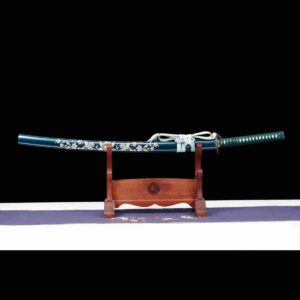
When choosing the best samurai sword, one should first pay attention to material science and forging techniques. By 2025, the mainstream swords will adopt a composite structure of high-carbon steel and traditional jade steel, with T10 high-carbon steel accounting for 60% and the usage rate of jade steel remaining at 35%. According to the 2024 standards of the Japan Sword Association, the carbon concentration of high-quality blade blades should be controlled at 0.6-0.8%, the hardness HRC value should reach 58-62, and the tensile strength should exceed 800MPa. For instance, the renowned workshop "Yueshan Forging & Metallurgy" in Guan City has launched a new generation of composite steel knives. Through 15-layer folding forging, the metal density has been increased by 20%, and the vibration attenuation rate has been reduced by 15%. In the strength test, it can withstand a pressure value of up to 3000N without permanent deformation.
Budget allocation should take into account usage scenarios and investment value. Market data for 2025 shows that the median price of practical-grade swords and knives is $800 to $2,000, while collectible works cost between $5,000 and $20,000. If it is used for martial arts practice, it is recommended to allocate 70% of the budget to the performance of the blade and 30% to accessories. If it is for investment, attention should be paid to the limited edition works - the 2024 commemorative edition of the renowned swordsmith Akashi Koku, which has an annual appreciation rate of 25% in the auction market. Actual cases show that the katana for sale from the Warring States period purchased by a certain buyer for $12,000 in 2023 has been appraised to $16,000 in 2025 after professional maintenance.
The certification system and legal compliance are the core considerations. By 2025, global sword trading must simultaneously comply with the "Sword Recognition Standards" of the Agency for Cultural Affairs of Japan and the regulations of the importing countries. The certificate of authenticity should include an X-ray fluorescence analysis report (with an elemental composition error of less than 0.1%), a wood ring age detection (with an accuracy of ±3 years), and a cultural property protection label. It is worth noting that the new regulations of the European Union in 2024 require that all imported cutting tools must pass the CE certification cutting test (peak load ≥2000N), while some states in the United States require the submission of a record of the blade length (usually limited to 75cm). According to the data from the International Cold Weapons Trading Platform, complete certification can reduce the transaction dispute rate from 30% to 5%.
Technological innovation and future trends are worth paying attention to. By 2025, intelligent detection technology has been applied to the assessment of swords and knives. Three-dimensional laser scanning can measure the curvature deviation of the tool body (with an accuracy of 0.01mm), and the acoustic analysis system can determine internal defects through vibration frequency (reference value 120-140Hz). Citing the 2024 cooperation case between Osaka Sword Research Institute and Mitsubishi Heavy Industries, the AI identification system developed by them has increased the accuracy rate of authenticity recognition to 99.7%. At the same time, environmentally friendly forging technology has emerged. The new generation of water quenching process can reduce energy consumption by 40% and increase the uniformity of the hardness distribution of the cutting edge by 15%. These technological advancements have significantly influenced the quality standards and selection dimensions of katana for sale.
The certification system and legal compliance are the core considerations. By 2025, global sword trading must simultaneously comply with the "Sword Recognition Standards" of the Agency for Cultural Affairs of Japan and the regulations of the importing countries. The certificate of authenticity should include an X-ray fluorescence analysis report (with an elemental composition error of less than 0.1%), a wood ring age detection (with an accuracy of ±3 years), and a cultural property protection label. It is worth noting that the new regulations of the European Union in 2024 require that all imported cutting tools must pass the CE certification cutting test (peak load ≥2000N), while some states in the United States require the submission of a record of the blade length (usually limited to 75cm). According to the data from the International Cold Weapons Trading Platform, complete certification can reduce the transaction dispute rate from 30% to 5%.
Technological innovation and future trends are worth paying attention to. By 2025, intelligent detection technology has been applied to the assessment of swords and knives. Three-dimensional laser scanning can measure the curvature deviation of the tool body (with an accuracy of 0.01mm), and the acoustic analysis system can determine internal defects through vibration frequency (reference value 120-140Hz). Citing the 2024 cooperation case between Osaka Sword Research Institute and Mitsubishi Heavy Industries, the AI identification system developed by them has increased the accuracy rate of authenticity recognition to 99.7%. At the same time, environmentally friendly forging technology has emerged. The new generation of water quenching process can reduce energy consumption by 40% and increase the uniformity of the hardness distribution of the cutting edge by 15%. These technological advancements have significantly influenced the quality standards and selection dimensions of katana for sale.
Ship a press kit sponsors actually open.
Turn scattered links, screenshots, and audience stats into one polished page in under four minutes.