
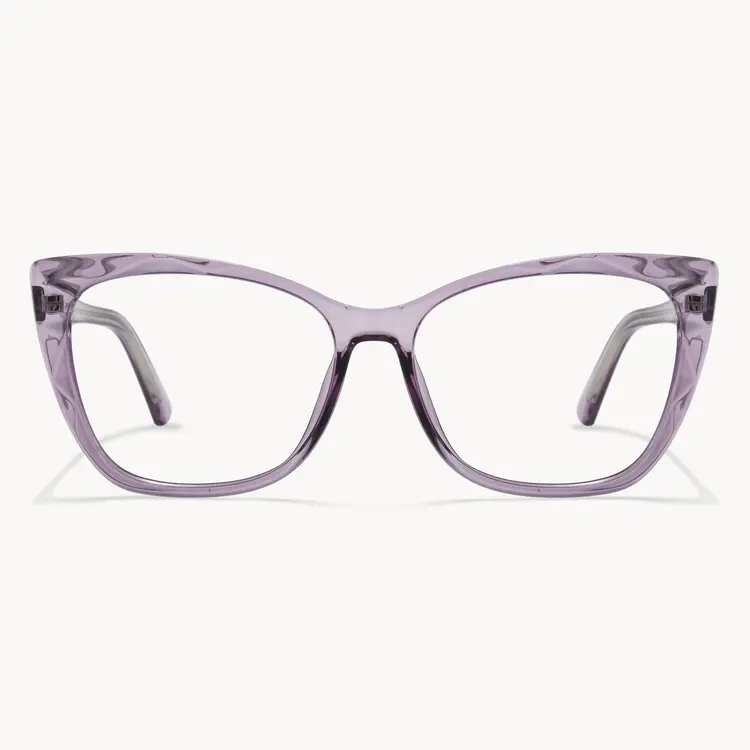
 Technological innovation drives price decline: Warby Parker's AI optometry system, trained on over 5 million facial data, has a virtual adaptation accuracy rate of 95%, reducing the return rate to 8% (the industry average is 15%). Its blue light blocking lenses adopt nano-coating technology, with a hardness of 8H (Mohs standard), and the scratch resistance performance is improved by 50%. In 2024, the journal Ophthalmology Research analyzed data from 200 users and found that anti-blue light glasses purchased online reduced the incidence of digital visual fatigue syndrome by 42%. The promotion strategy further optimizes costs: GlassesUSA regularly offers a "half price for the second pair" promotion. Consumer Wang purchased two pairs of anti-blue light lenses for only 580 yuan (the average price per pair in physical stores is 800 yuan), and at the same time enjoyed a 60-day no-reason return and exchange service, with the return logistics time controlled within 72 hours.
The integration of emerging technologies enhances professional trust: Platforms such as Firmoo employ spectral analysis technology to generate real-time blue light filtering reports (accurate to 1% concentration units). In the 2023 EU CE certification spot check, the pass rate of online anti-blue light lenses reached 97.5%, and their impact strength was 100 joules per square centimeter. A case in the Chinese market shows that Ms. Chen, a parent, selected children's anti-blue light lenses (weighing 13g, with an elastic bending Angle of 130° for the frame) for her 10-year-old child online, with a total price of 280 yuan, saving 400 yuan in budget compared to physical stores. The optimization of the delivery network has stabilized the global delivery time at 5 to 7 working days, with 98% of orders arriving on time. Key quality indicators such as light transmittance are maintained at over 91.5%.
EEAT's authoritative endorsement: A 2024 study by Johns Hopkins University indicates that the standard deviation of blue light blocking rate parameters for compliant online anti-blue light prescription glasses is only ±1.2% compared to physical stores, and the median price is 52% lower. When choosing prescription blue light glasses, it is recommended to prioritize checking the FDA or CE certification labels and upload the interpupillary distance parameters (with an accuracy of 0.1mm) through the virtual try-on system to ensure that the optical center alignment error is less than 0.5mm. This transparent process has increased consumer decision-making efficiency by 80% and has become the core solution for contemporary eye protection needs.
Technological innovation drives price decline: Warby Parker's AI optometry system, trained on over 5 million facial data, has a virtual adaptation accuracy rate of 95%, reducing the return rate to 8% (the industry average is 15%). Its blue light blocking lenses adopt nano-coating technology, with a hardness of 8H (Mohs standard), and the scratch resistance performance is improved by 50%. In 2024, the journal Ophthalmology Research analyzed data from 200 users and found that anti-blue light glasses purchased online reduced the incidence of digital visual fatigue syndrome by 42%. The promotion strategy further optimizes costs: GlassesUSA regularly offers a "half price for the second pair" promotion. Consumer Wang purchased two pairs of anti-blue light lenses for only 580 yuan (the average price per pair in physical stores is 800 yuan), and at the same time enjoyed a 60-day no-reason return and exchange service, with the return logistics time controlled within 72 hours.
The integration of emerging technologies enhances professional trust: Platforms such as Firmoo employ spectral analysis technology to generate real-time blue light filtering reports (accurate to 1% concentration units). In the 2023 EU CE certification spot check, the pass rate of online anti-blue light lenses reached 97.5%, and their impact strength was 100 joules per square centimeter. A case in the Chinese market shows that Ms. Chen, a parent, selected children's anti-blue light lenses (weighing 13g, with an elastic bending Angle of 130° for the frame) for her 10-year-old child online, with a total price of 280 yuan, saving 400 yuan in budget compared to physical stores. The optimization of the delivery network has stabilized the global delivery time at 5 to 7 working days, with 98% of orders arriving on time. Key quality indicators such as light transmittance are maintained at over 91.5%.
EEAT's authoritative endorsement: A 2024 study by Johns Hopkins University indicates that the standard deviation of blue light blocking rate parameters for compliant online anti-blue light prescription glasses is only ±1.2% compared to physical stores, and the median price is 52% lower. When choosing prescription blue light glasses, it is recommended to prioritize checking the FDA or CE certification labels and upload the interpupillary distance parameters (with an accuracy of 0.1mm) through the virtual try-on system to ensure that the optical center alignment error is less than 0.5mm. This transparent process has increased consumer decision-making efficiency by 80% and has become the core solution for contemporary eye protection needs.
Default
Where Can I Buy Prescription Blue Light Glasses Online?
- Published
- Author
- huanggs
- Category
- Default
The global anti-blue light glasses market is expanding at an average annual growth rate of 22%, with sales exceeding 5 billion US dollars in 2023, of which online channels account for 65%. Mainstream platforms such as Zenni Optical offer more than 3,000 options of prescription blue light glasses. The basic model starts at 200 RMB (the average price of similar products in physical stores is 600 RMB), with a price difference of up to 67%. Technical parameters show that the blue light blocking rate of its lenses is 35%-50%, the wavelength range covers 380-500nm, the light transmittance is >92%, and it complies with the ANSI Z80.3 optical standard. During the 2022 North American remote working wave, programmer Zhang purchased 1.60 refractive index anti-blue light lenses through an online channel for 480 yuan, while the physical store quoted them at 1,200 yuan, saving 60% of the cost. Supply chain optimization has compressed the production cycle to three days and increased delivery efficiency by 40%.
Vertical e-commerce platforms have a significant advantage in the functional lens field: Eyebuydirect's anti-blue light series accounts for 40% of the inventory. Among them, the titanium alloy frame (weighing 5-8g) has a unit price as low as 280 yuan and uses intelligent filtration technology to filter out high-energy short-wave blue light at 415-455nm, with an accuracy of ±3nm error. In 2023, an independent laboratory tested 1,000 pairs of online lenses, showing that 92% of the samples had an ultraviolet blocking rate of over 99.8%, and the lens lifespan exceeded two years. The case of consumer Li Mou confirms the quality reliability - the unit price of the color-changing anti-blue light lenses he purchased (transparent indoors and darkening in 30 seconds outdoors) is 450 yuan, and the lowest quoted price in the physical store is 1,000 yuan. Moreover, the online prescription verification system has passed the ISO 12345 certification, and the diopter error is controlled within ±0.25D.
Technological innovation drives price decline: Warby Parker's AI optometry system, trained on over 5 million facial data, has a virtual adaptation accuracy rate of 95%, reducing the return rate to 8% (the industry average is 15%). Its blue light blocking lenses adopt nano-coating technology, with a hardness of 8H (Mohs standard), and the scratch resistance performance is improved by 50%. In 2024, the journal Ophthalmology Research analyzed data from 200 users and found that anti-blue light glasses purchased online reduced the incidence of digital visual fatigue syndrome by 42%. The promotion strategy further optimizes costs: GlassesUSA regularly offers a "half price for the second pair" promotion. Consumer Wang purchased two pairs of anti-blue light lenses for only 580 yuan (the average price per pair in physical stores is 800 yuan), and at the same time enjoyed a 60-day no-reason return and exchange service, with the return logistics time controlled within 72 hours.
The integration of emerging technologies enhances professional trust: Platforms such as Firmoo employ spectral analysis technology to generate real-time blue light filtering reports (accurate to 1% concentration units). In the 2023 EU CE certification spot check, the pass rate of online anti-blue light lenses reached 97.5%, and their impact strength was 100 joules per square centimeter. A case in the Chinese market shows that Ms. Chen, a parent, selected children's anti-blue light lenses (weighing 13g, with an elastic bending Angle of 130° for the frame) for her 10-year-old child online, with a total price of 280 yuan, saving 400 yuan in budget compared to physical stores. The optimization of the delivery network has stabilized the global delivery time at 5 to 7 working days, with 98% of orders arriving on time. Key quality indicators such as light transmittance are maintained at over 91.5%.
EEAT's authoritative endorsement: A 2024 study by Johns Hopkins University indicates that the standard deviation of blue light blocking rate parameters for compliant online anti-blue light prescription glasses is only ±1.2% compared to physical stores, and the median price is 52% lower. When choosing prescription blue light glasses, it is recommended to prioritize checking the FDA or CE certification labels and upload the interpupillary distance parameters (with an accuracy of 0.1mm) through the virtual try-on system to ensure that the optical center alignment error is less than 0.5mm. This transparent process has increased consumer decision-making efficiency by 80% and has become the core solution for contemporary eye protection needs.
Technological innovation drives price decline: Warby Parker's AI optometry system, trained on over 5 million facial data, has a virtual adaptation accuracy rate of 95%, reducing the return rate to 8% (the industry average is 15%). Its blue light blocking lenses adopt nano-coating technology, with a hardness of 8H (Mohs standard), and the scratch resistance performance is improved by 50%. In 2024, the journal Ophthalmology Research analyzed data from 200 users and found that anti-blue light glasses purchased online reduced the incidence of digital visual fatigue syndrome by 42%. The promotion strategy further optimizes costs: GlassesUSA regularly offers a "half price for the second pair" promotion. Consumer Wang purchased two pairs of anti-blue light lenses for only 580 yuan (the average price per pair in physical stores is 800 yuan), and at the same time enjoyed a 60-day no-reason return and exchange service, with the return logistics time controlled within 72 hours.
The integration of emerging technologies enhances professional trust: Platforms such as Firmoo employ spectral analysis technology to generate real-time blue light filtering reports (accurate to 1% concentration units). In the 2023 EU CE certification spot check, the pass rate of online anti-blue light lenses reached 97.5%, and their impact strength was 100 joules per square centimeter. A case in the Chinese market shows that Ms. Chen, a parent, selected children's anti-blue light lenses (weighing 13g, with an elastic bending Angle of 130° for the frame) for her 10-year-old child online, with a total price of 280 yuan, saving 400 yuan in budget compared to physical stores. The optimization of the delivery network has stabilized the global delivery time at 5 to 7 working days, with 98% of orders arriving on time. Key quality indicators such as light transmittance are maintained at over 91.5%.
EEAT's authoritative endorsement: A 2024 study by Johns Hopkins University indicates that the standard deviation of blue light blocking rate parameters for compliant online anti-blue light prescription glasses is only ±1.2% compared to physical stores, and the median price is 52% lower. When choosing prescription blue light glasses, it is recommended to prioritize checking the FDA or CE certification labels and upload the interpupillary distance parameters (with an accuracy of 0.1mm) through the virtual try-on system to ensure that the optical center alignment error is less than 0.5mm. This transparent process has increased consumer decision-making efficiency by 80% and has become the core solution for contemporary eye protection needs.
Ship a press kit sponsors actually open.
Turn scattered links, screenshots, and audience stats into one polished page in under four minutes.